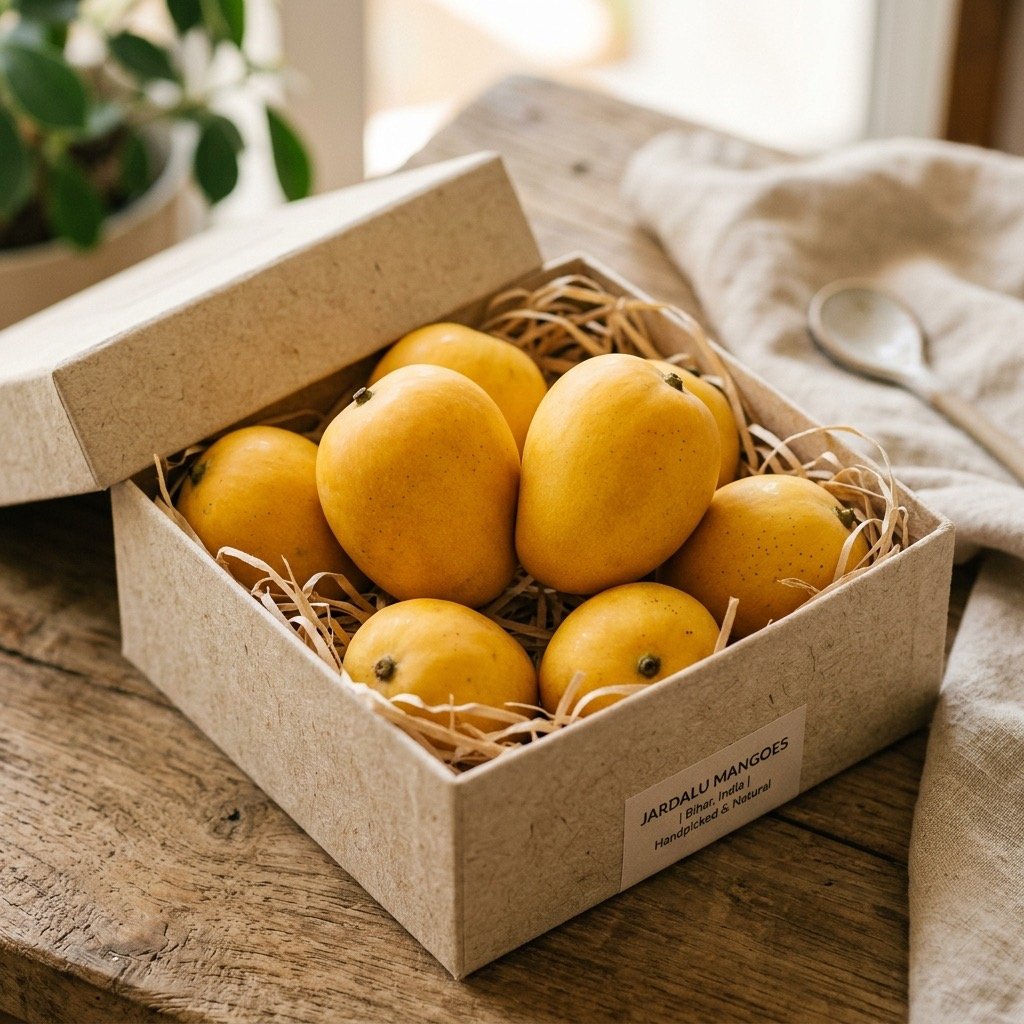
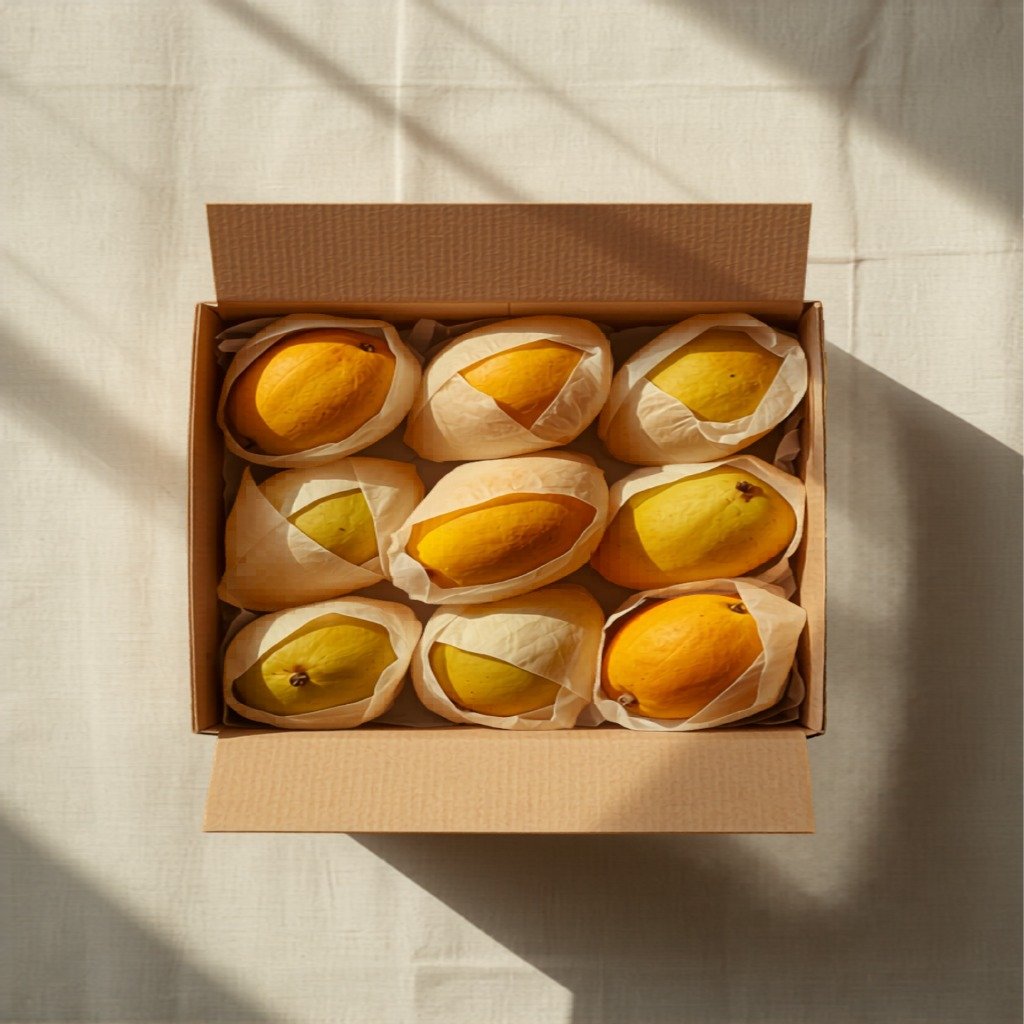
Fibreless. Honey-sweet. Saffron-fragrant. For three weeks every year.
Also known as Zardalu mango, the Jardalu holds GI Tag #18 — legally exclusive to Bhagalpur district, Bihar. No orchard outside that zone can sell fruit as Jardalu or Zardalu. That's not a brand claim — it's geography.
The flesh is almost translucent at peak ripeness. No strings. Pure pulp. A mango you eat with a spoon, not a battle you fight with your teeth.
Clinically documentable. Jardalu has a lower GI than most mango varieties — making it a safer seasonal indulgence for people managing blood sugar.
The fragrance fills the room before you open the box. A saffron-like, honey-floral scent that is the first thing every first-time buyer notices.
Served to the President and PM of India. Not a marketing claim — a documented ceremonial record that travels on every origin card we ship.
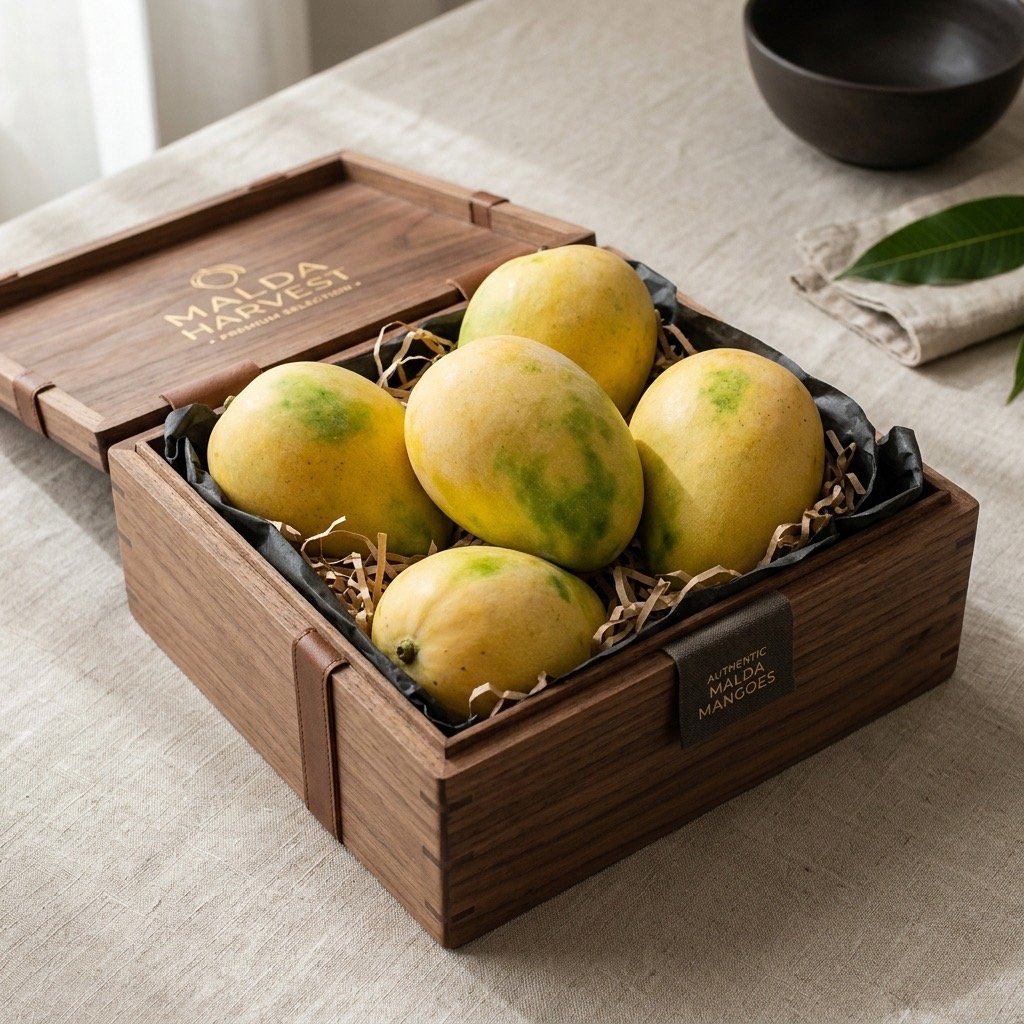
World-famous GI-tagged mangoes from Bhagalpur. Hand-picked and naturally ripened. ⏳ Last batch — only a few days left. Order 3 boxes, get 1 free (Delhi NCR).
🚚 Free delivery across Delhi NCR · 🥭 Buy 3 boxes, get 1 free (one per order) · Outside NCR? WhatsApp us to check.
Alphonso is a Konkan coast variety — sweet, rich, and well-known. Jardalu is an entirely different fruit from Bhagalpur, Bihar. It has a distinctive saffron-like fragrance, is completely fibreless, has a lower glycaemic index than most mangoes, and carries a Government of India GI Tag (#18). It's smaller, more aromatic, and has a honey-like sweetness that Alphonso doesn't replicate.
The Jardalu harvest window is Mid June to Late July each year — approximately 6 weeks. This brevity is what makes it special. Boxes are available to order now, with free delivery across Delhi NCR — while the short season lasts.
Jardalu holds GI Tag #18, issued by the Government of India. This legally protects the name — only mangoes grown in Bhagalpur district, Bihar, can be sold as "Jardalu Mango." This means you cannot replicate it elsewhere, and what you receive is genuinely from the certified geography.
We operate a 72-hour harvest-to-door promise. Mangoes are picked at optimal ripeness, individually wrapped, and dispatched in premium corrugated crates via refrigerated transit across Delhi NCR. Every box includes a ripening guide so you receive the fruit at exactly the right stage.
We currently deliver only across Delhi NCR — Delhi, Noida, Greater Noida, Gurugram, Faridabad, Ghaziabad, Sonipat and nearby — and delivery is free. Ordering from outside NCR? WhatsApp us and we'll confirm whether we can reach you.
Beyond 72 hours, ambient transit risk increases sharply. We don't cut this corner.
Picked slightly firm, turning golden. Within the ripening window — not a day late.
Sorted, individually paper-wrapped. No two fruits touching. Moulded tray insert.
Premium corrugated crate packed. Refrigerated vehicle to dispatch hub. 10–12°C.
At your door. Ripening guide in every box. Managed experience, end to end.
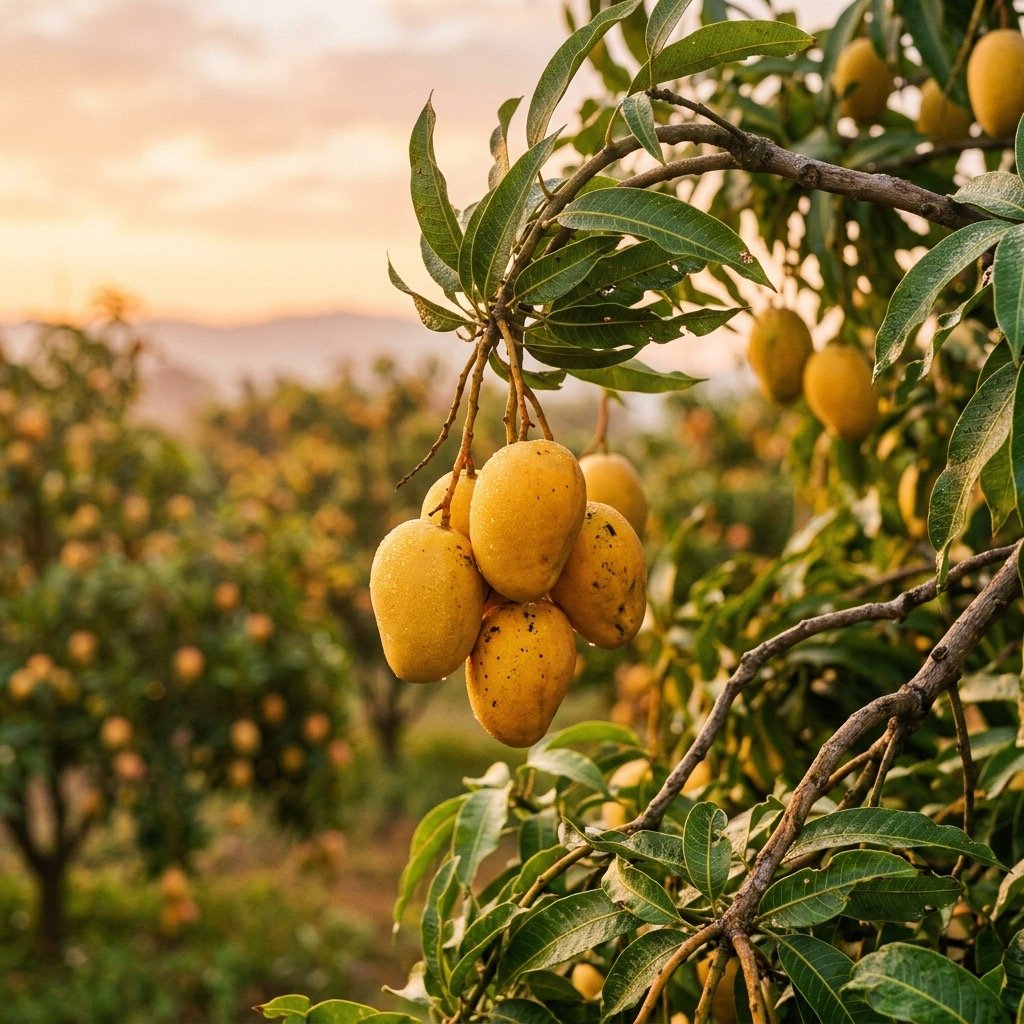
The Jardalu mango is one of fewer than a dozen Indian mangoes ever to earn a Geographical Indication tag — and like Champagne or Darjeeling tea, the name is legally tied to its place of origin. The orchards line the southern bank of the Ganga between Bhagalpur and Sultanganj in eastern Bihar, on a narrow belt of silt-rich alluvial soil that the river has been depositing for centuries. Take a Jardalu seedling fifty kilometres away and the fruit it produces is recognisably different: the fragrance dulls, the texture coarsens, the saffron note disappears. The variety and the soil are inseparable.
The variety's lineage is traced to grafts that arrived with the Mughal court in the seventeenth century — "Zardalu" is Persian for golden-yellow, the colour the fruit turns when fully ripe. Bhagalpur's families have grown it continuously since, often in orchards that pass from grandfather to grandson. The President of India sends a crate from these orchards to visiting heads of state each summer; the practice is older than the Republic itself.
A true Bhagalpuri Jardalu is small to medium — rarely above 250 grams — with a faint blush on the shoulder when ripe. The flesh is fibreless, which is the single most important difference between Jardalu and the more famous Alphonso. You can eat it with a spoon, you can blend it without straining, and the seed comes away clean. The fragrance is the giveaway: a layered honey-and-saffron note that fills a room within minutes of cutting. Imitations grown outside the GI zone lack it entirely.
The Jardalu harvest window is short and unforgiving: roughly late May to the last week of June, with the peak two weeks falling around the first week of June. The fruit ripens on the tree and does not store well — by July it is gone for the year. Cold storage destroys the aroma, which is why supermarkets almost never carry it. The only way to taste Jardalu the way Bihar tastes it is to have the crate arrive within seventy-two hours of being picked. That is what we do.
Hold the fruit at the stem end, give it a gentle squeeze; if it yields slightly, it is ready. Cut around the seed, score the flesh into cubes, and invert the peel. Eat it cold but not frozen — refrigerate for thirty minutes, no longer. A pinch of black salt sharpens the sweetness; a squeeze of lime sharpens the perfume. Pair with a glass of unaged Riesling or chilled buttermilk. Do not cook it. This is a fruit that asks to be eaten exactly as it is.
Further reading: Jardalu vs Alphonso — a side-by-side comparison · Bihar Harvest Calendar 2026 · Adopt a Jardalu tree in Bhagalpur