The Origin Story
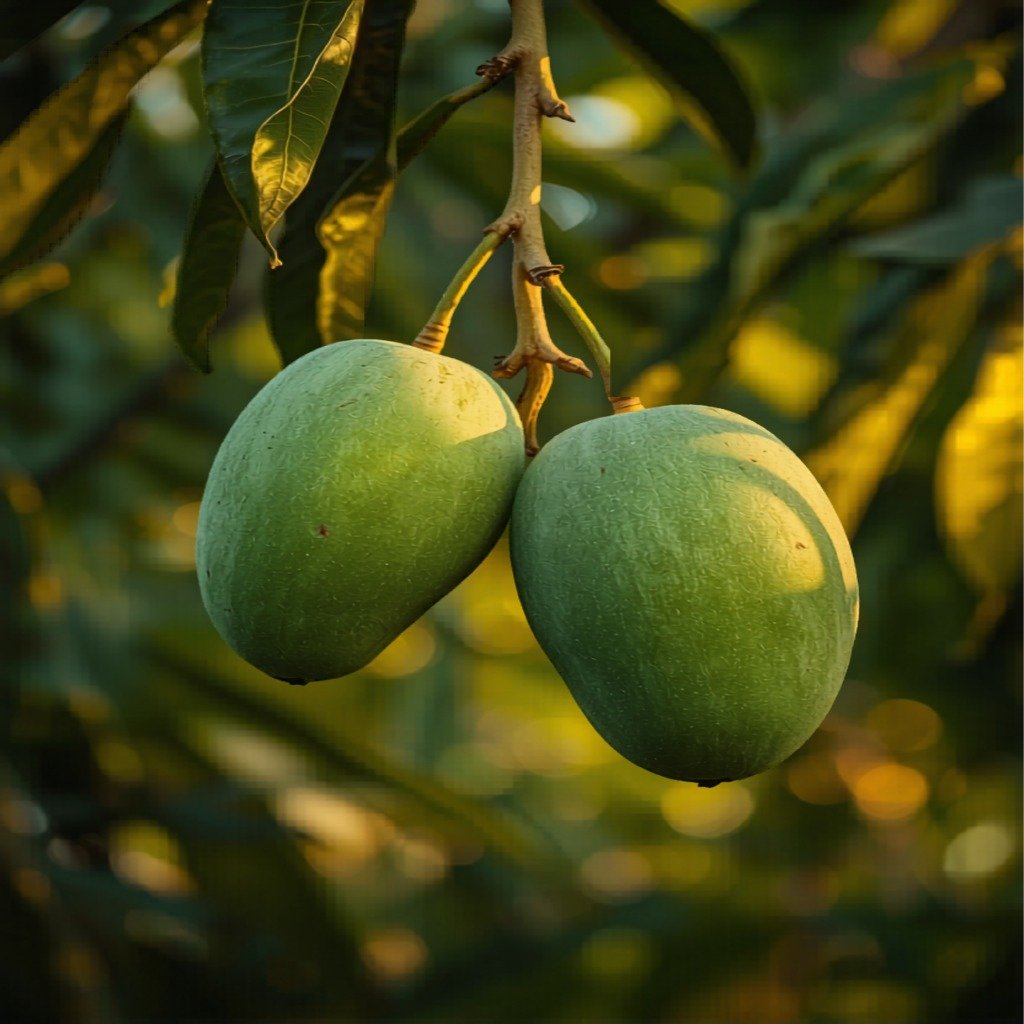
Langda — the green mango that knows when to be ripe.
Of all India's heritage mangoes, the Banarasi Langda is the one that confuses first-time buyers most: it stays green on the outside even when fully ripe inside. The colour never goes golden. Pick one up after eight days off the tree and it still looks like an unripe fruit at first glance — until you press a thumb gently into the shoulder and feel it yield, and the unmistakable Langda fragrance rises from the stem. That fragrance is what Banaras has been built on for two and a half centuries.
A name with a story
The name "Langda" — literally "lame" in Hindi — comes from a local legend about an eighteenth-century farmer who had a limp and grew the original variety in his courtyard near Banaras. He refused to sell grafts, so neighbours took cuttings without permission, and within a generation the variety had spread across eastern Uttar Pradesh, north Bihar, and into Bangladesh. The farmer's name is lost; his nickname for the tree survived. There are now Langda orchards across the Indo-Gangetic plain, but the original Banarasi Langda — the one grown on the alluvium between the Ganga and the Gomti — still tastes different from the rest.
What it tastes like
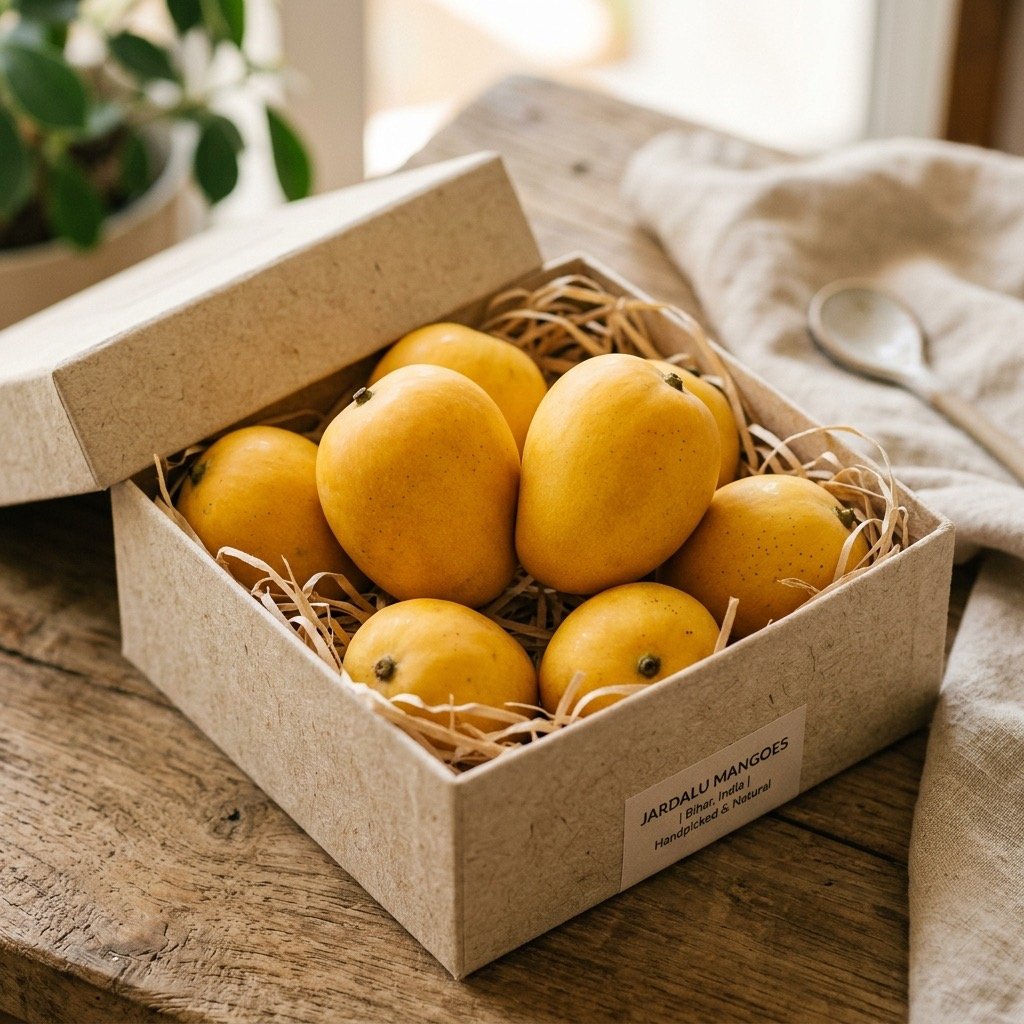
Langda is the most aromatic of the major Indian mangoes — more so than Alphonso, more so than Dasheri. The flesh is bright yellow, almost fluorescent, and the fragrance has a turpentine-floral edge that mango scholars trace to specific volatile compounds the variety produces in unusually high concentration. Texture is firm but fibreless, closer to Jardalu than to Alphonso. It is the mango most often used in north Indian aam panna and aamras because it holds its character through pulping; eaten fresh, it is best lightly chilled and cut into slabs around the seed.
When is Langda mango season?
Langda is the late mango. Harvest begins in the last week of June and runs through July and into the first week of August — long after Alphonso has finished and overlapping with the back half of Malda. For people who associate mango season with May, Langda is a revelation: it stretches the season by a full month, and because it arrives during the monsoon, the cold-chain handling matters more than for any other variety. We ship Langda only in temperature-controlled vehicles. Anyone offering Langda in May is either selling something else or selling early-picked fruit that will never develop its real aroma.
How to know when it's ripe
Forget the colour. A ripe Banarasi Langda is still green, sometimes with the faintest yellow blush near the stem. Trust two things: the fragrance, which becomes powerful at three to four feet away, and the give — a gentle press should leave a faint dimple that springs back slowly. If it feels rock-hard, leave it in newspaper at room temperature for two days. If it feels soft like dough, eat it today. Refrigerate only after it is ripe, and only for two or three hours before eating; long refrigeration dulls the fragrance that is the whole reason for the variety.
Further reading: Heritage Indian mangoes — Jardalu, Langda, Malda, Alphonso · Harvest Calendar 2026 · How tree adoption works