The Origin Story
What makes Muzaffarpur's Shahi Litchi the world's finest.
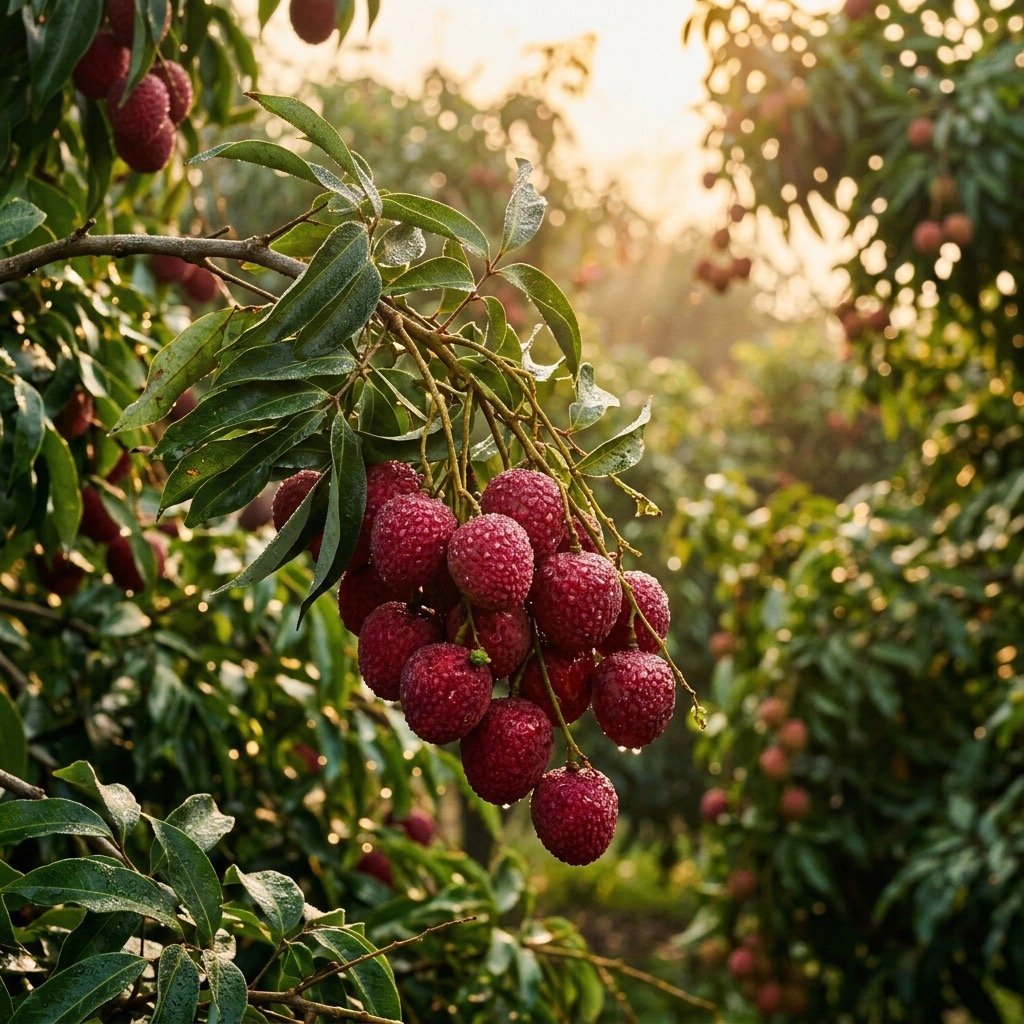
Litchi is grown in a dozen countries, but the rose-scented, translucent-fleshed variety the British in Calcutta called the "Queen of Litchis" comes from a single district in north Bihar. Muzaffarpur's Shahi Litchi was India's seventh-ever GI-tagged product (registration number 7, 2009) — a recognition that the variety and the place are inseparable. The trees were originally planted from Chinese stock brought across the Himalayas more than a century ago; they took to the alluvial soil of the Burhi Gandak floodplain in a way they never did anywhere else.
Why this soil, and nowhere else
The litchi tree is fussy. It needs the calcium-rich, slightly acidic silt that the Burhi Gandak deposits across Muzaffarpur and East Champaran. It needs a winter cool enough to trigger flowering but a spring warm enough to set fruit, and it needs the precise April-May humidity that the Bihar plain produces. Grow the same variety in Punjab or Maharashtra and the fruit is smaller, the aril cloudier, the rose note absent. Genuine Shahi Litchi comes only from inside the GI zone — and within that, only from the older orchards where the trees are forty years and up.
No sulphur dioxide. Ever.
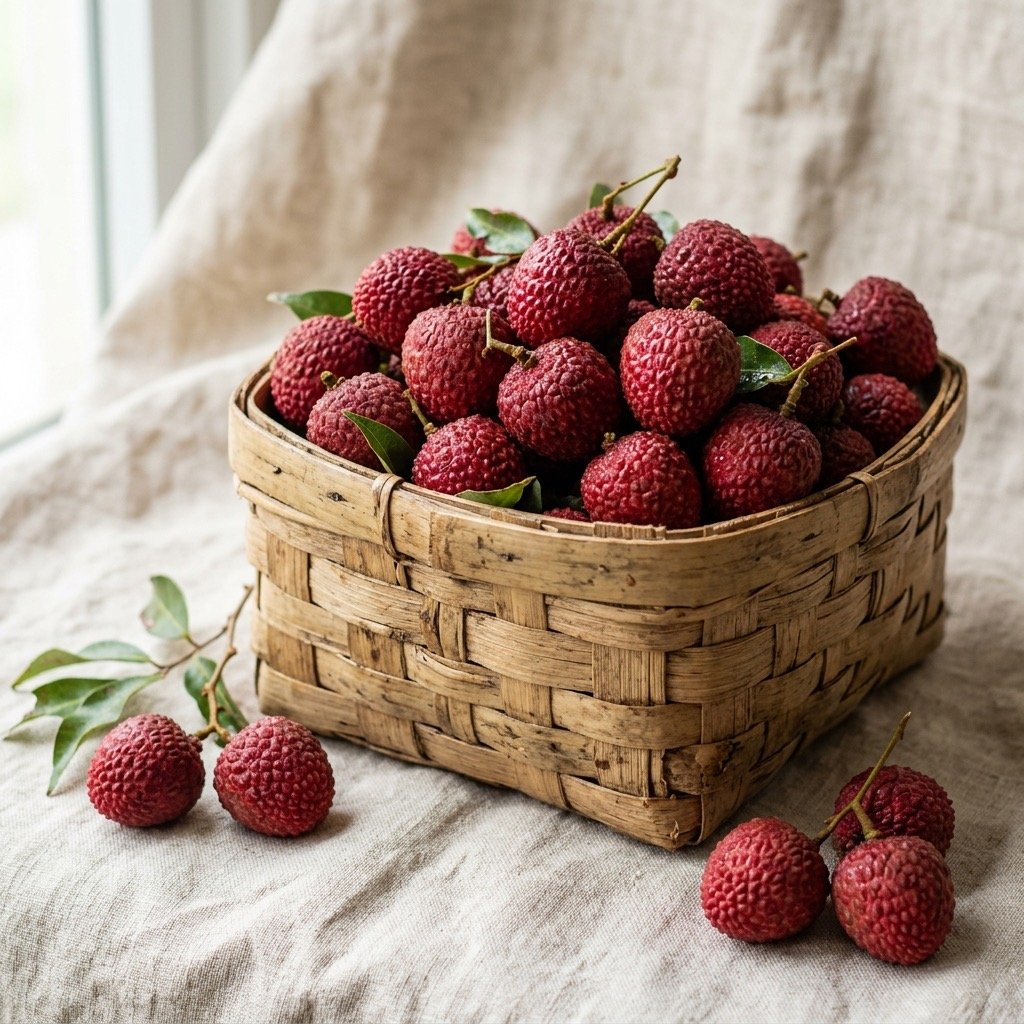
Most commercial litchi in India is dipped in sulphur dioxide to preserve the red colour of the skin during transit. The chemical bleaches the aril, dulls the fragrance, and leaves a residue that the FSSAI now restricts but does not yet ban. We never use it. Our fruit arrives the natural way: skin shading from red to a brown-pink as it ages, exactly as it should. If you have only ever eaten supermarket litchi, the first untreated Shahi Litchi is a revelation — the perfume that fills the kitchen, the rose note, the burst of liquid juice that scientists believe gives the fruit its name (the Chinese 荔枝, *lai-zi*, means "departing from a branch").
When is the Shahi Litchi season?
Three weeks. That is the entire commercial harvest: roughly 15 May to the first week of June, with a peak window of about ten days in late May. The fruit ripens almost all at once across the district; pickers work from four in the morning to avoid the heat, and trucks leave Muzaffarpur the same evening. Once cut from the tree, a Shahi Litchi loses its perfume within seventy-two hours regardless of cold storage. There is no "off-season" Shahi Litchi. If someone is selling it in August, it is not Shahi.
How to eat it
Refrigerate the box for two to three hours after it arrives — not longer, or the aroma flattens. Peel with the thumbnail at the stem end; the skin should come away in a single curl. Eat the aril whole, spit the stone. Do not freeze, do not blend, do not pair with chilli or salt. A glass of cold water, a quiet veranda, a paper plate for the stones: that is the right setting. The Mughals used to send couriers with the fruit packed in damp khus-grass; we use temperature-controlled vehicles, but the urgency is the same.
Further reading: Shahi Litchi of Muzaffarpur — the rose-scented queen · Bihar Harvest Calendar 2026 · Adopt a litchi tree in Muzaffarpur