The Origin Story
Malda — the mango Alphonso fans rediscover.
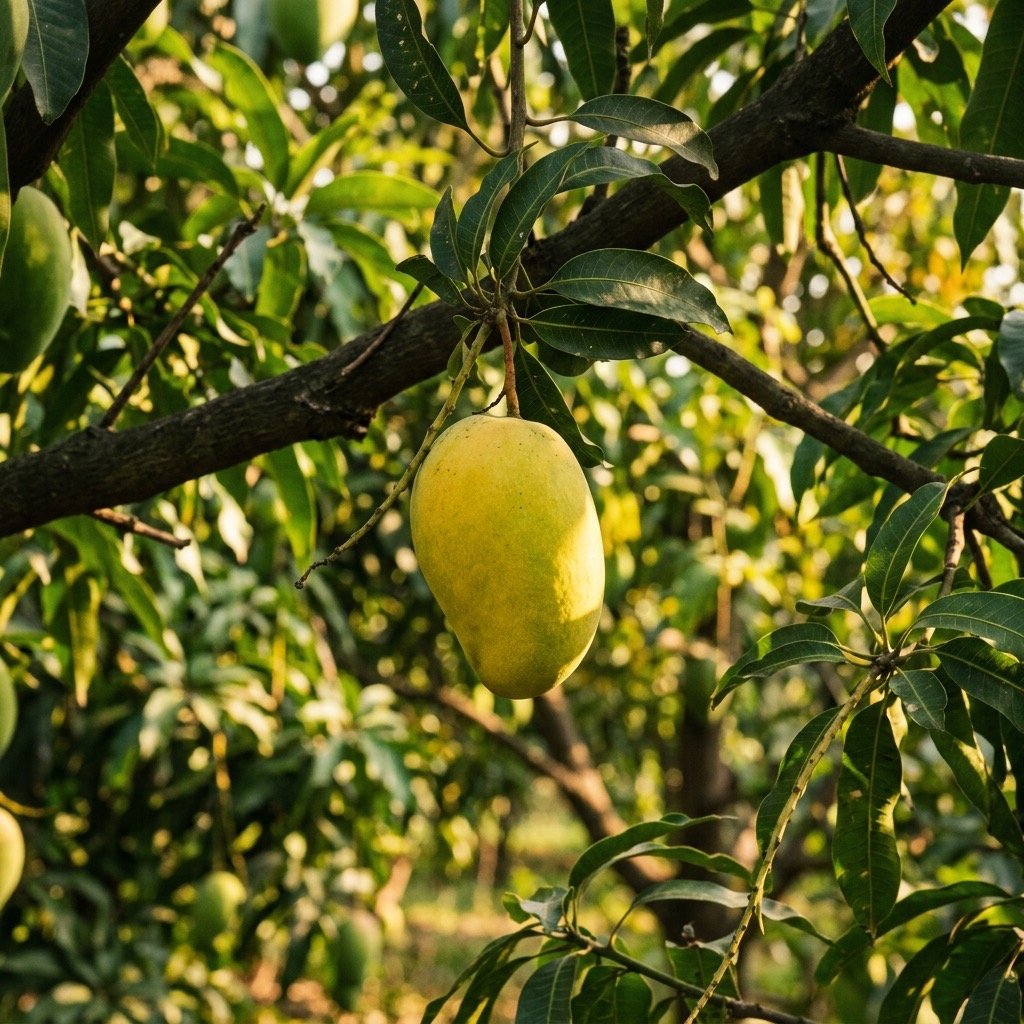
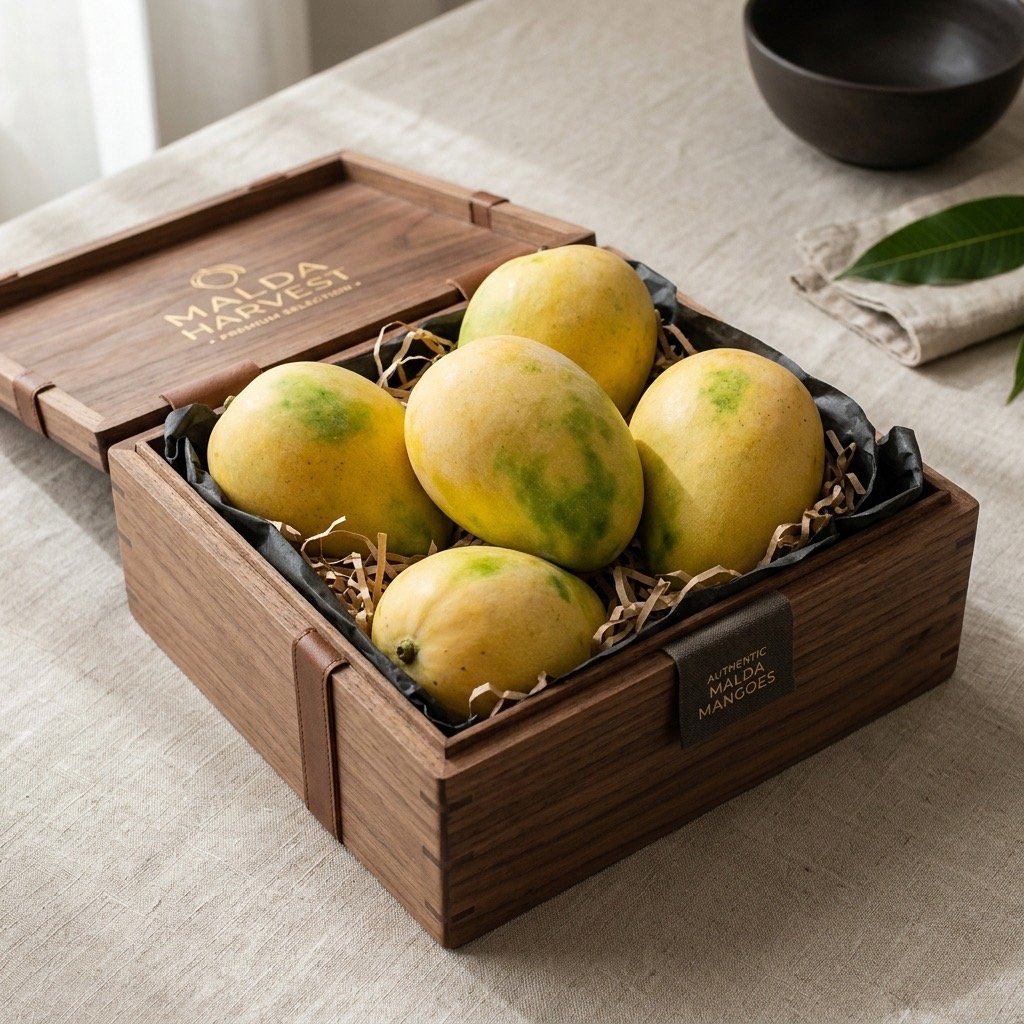
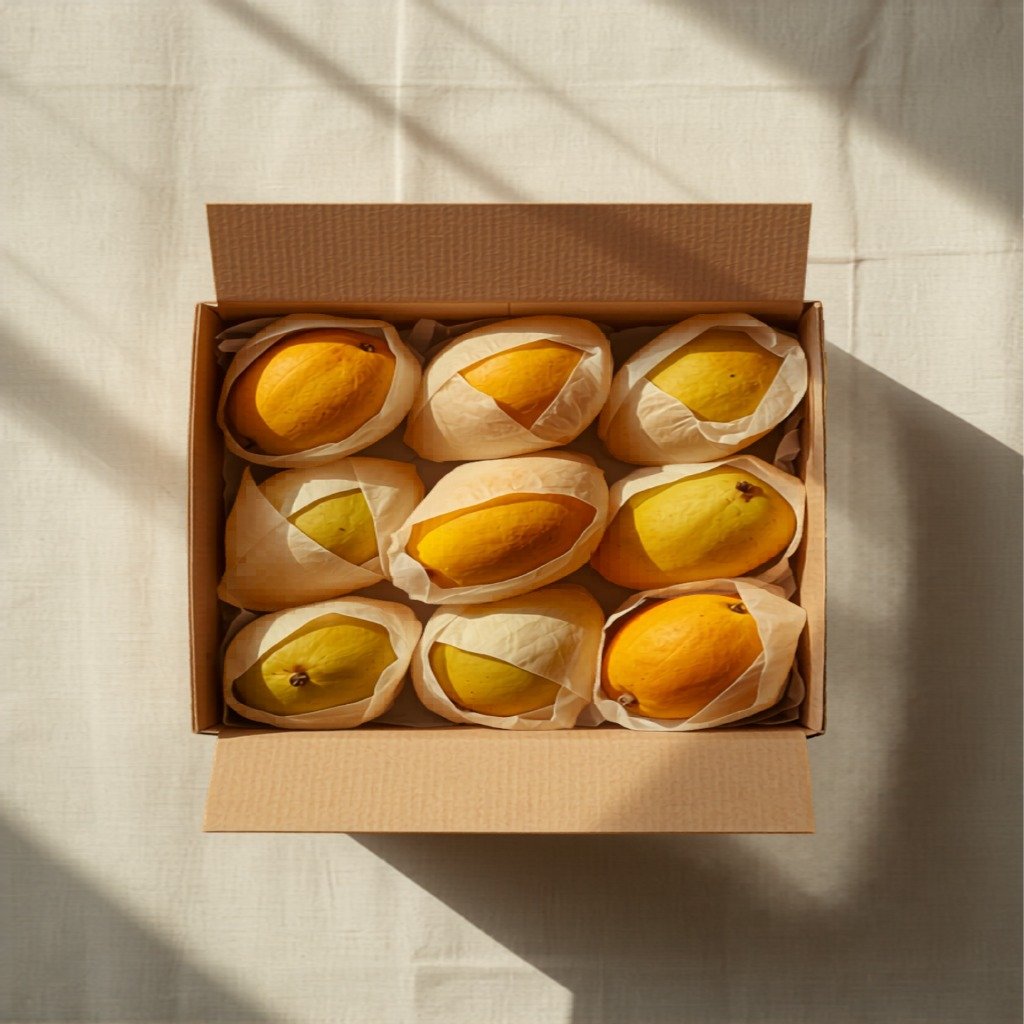
Bengal's Malda mango — sometimes called Dudhiya Malda for its milky-creamy flesh — is the heritage cultivar that grew in the Mughal Emperor's gardens and that still arrives on the President of India's table every July. Across Malda, Murshidabad, and adjoining Bangladesh, families have been grafting it from the same parent trees for more than three hundred years. It is not bred for shelf life, supermarket display, or international export. It is bred for one thing: the taste of one perfectly ripe fruit eaten at room temperature in a Bengali summer.
A different kind of mango
If you know mangoes only through Alphonso, the first Malda is disorienting. The skin is paper-thin — you can almost see the flesh through it. The flesh itself is the colour of butter, not gold, and its texture is closer to custard than to fruit. There is no fibre at all, not even near the stone. The sweetness is high but balanced by a faint milky-floral note that is unique to the variety. Connoisseurs argue that Alphonso is the louder mango, but Malda is the deeper one. We do not pick a side. We just send the fruit.
Why Malda district, and why these orchards
The Malda district sits on the western bank of the Mahananda, where the soil is sandy-loam with a high water table — exactly what the Malda cultivar requires to produce the milky flesh it is famous for. Move the tree to the harder soils of central or southern Bengal and the fruit comes out coarser and less aromatic. We work with grower families in the older Malda blocks, where the trees average forty to seventy years of age. Old trees produce fewer fruit, but the fruit is denser, more concentrated, and ripens more evenly than the high-yield commercial cultivars now flooding the wholesale markets.
When is Malda mango season?
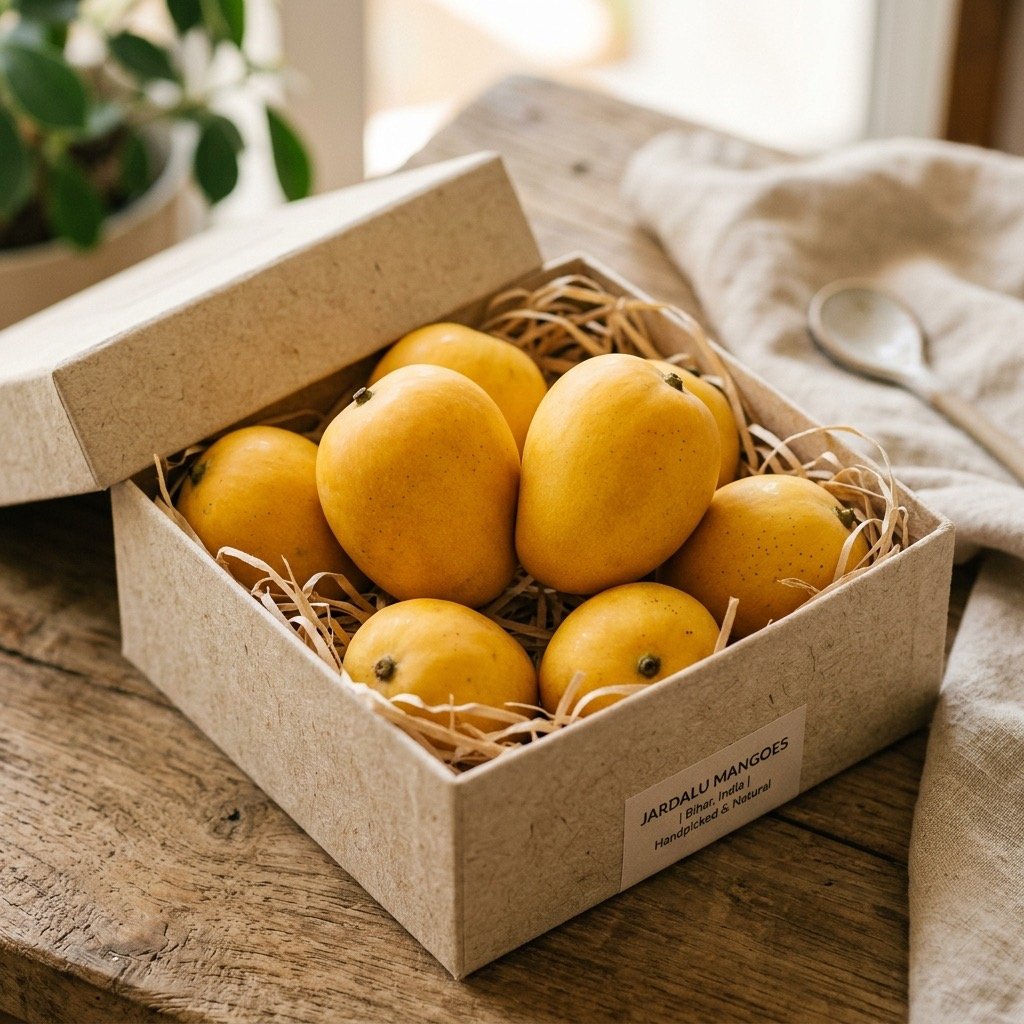
Malda is a late-season mango — the harvest runs from the last week of June through most of July, which is roughly a month after Alphonso has finished and during the back half of the Jardalu season. That late arrival is part of what made it the Mughal court's preferred variety: it extended the mango season by nearly a month and travelled well enough to reach Delhi while still in good condition. For modern eaters, it means Malda is the mango you turn to after the early-summer rush is over and the others have stopped fruiting.
How to eat it
Eat Malda at room temperature, not chilled — refrigeration mutes the milky note that is the variety's whole point. The classical Bengali method is to roll the soft ripe fruit between the palms until the flesh inside is fully pulped, snip the stem end, and squeeze the contents straight into the mouth. No knife, no plate. If that feels alarming, a paring knife and a deep bowl work too: the juice runs heavy, and you will want bread or warm puris to catch what you can't eat fast enough. Pair with hot chai, not cold.
Further reading: Jardalu vs Alphonso — and where Malda fits in · Bihar & Bengal Harvest Calendar 2026 · How tree adoption works